 Log in
Foot
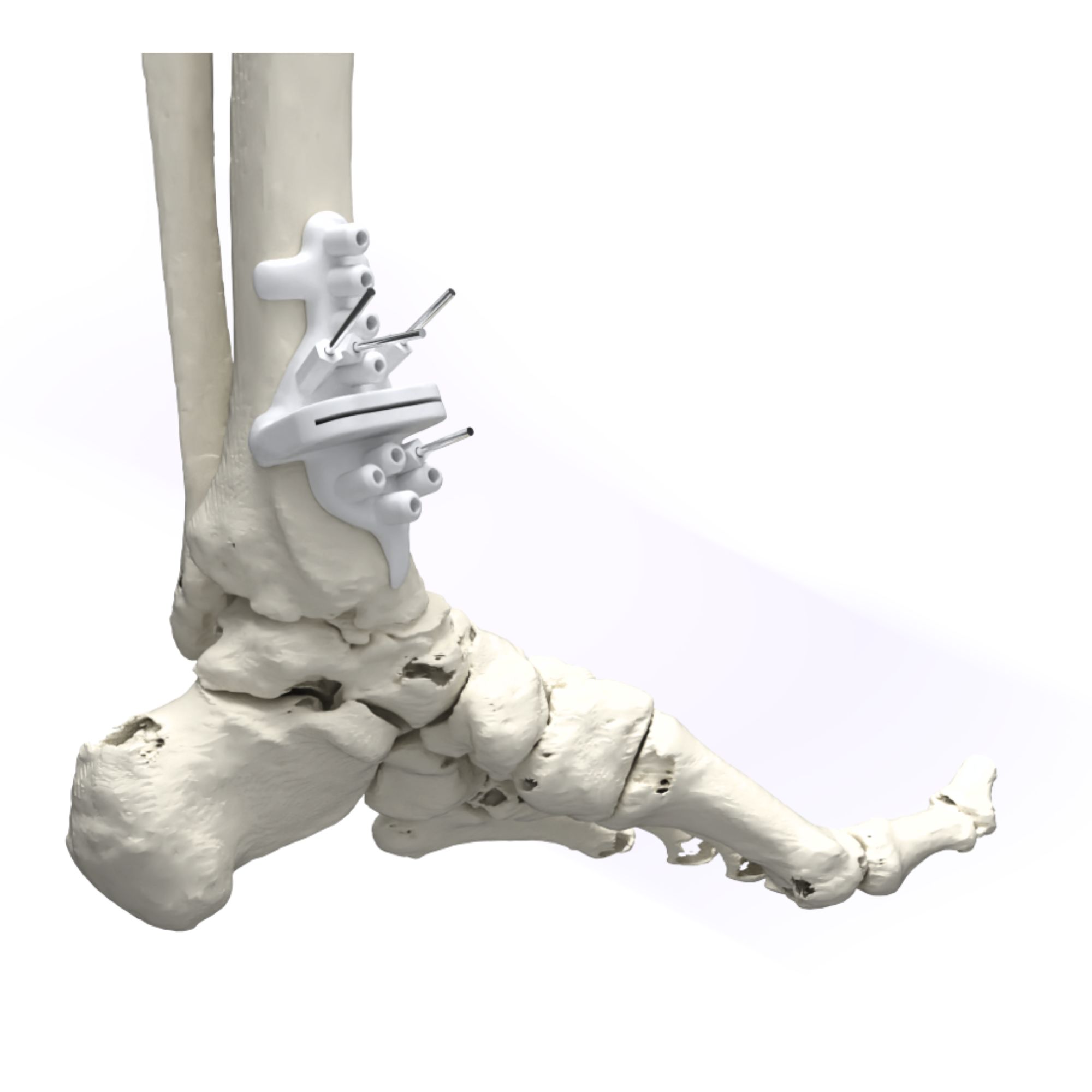
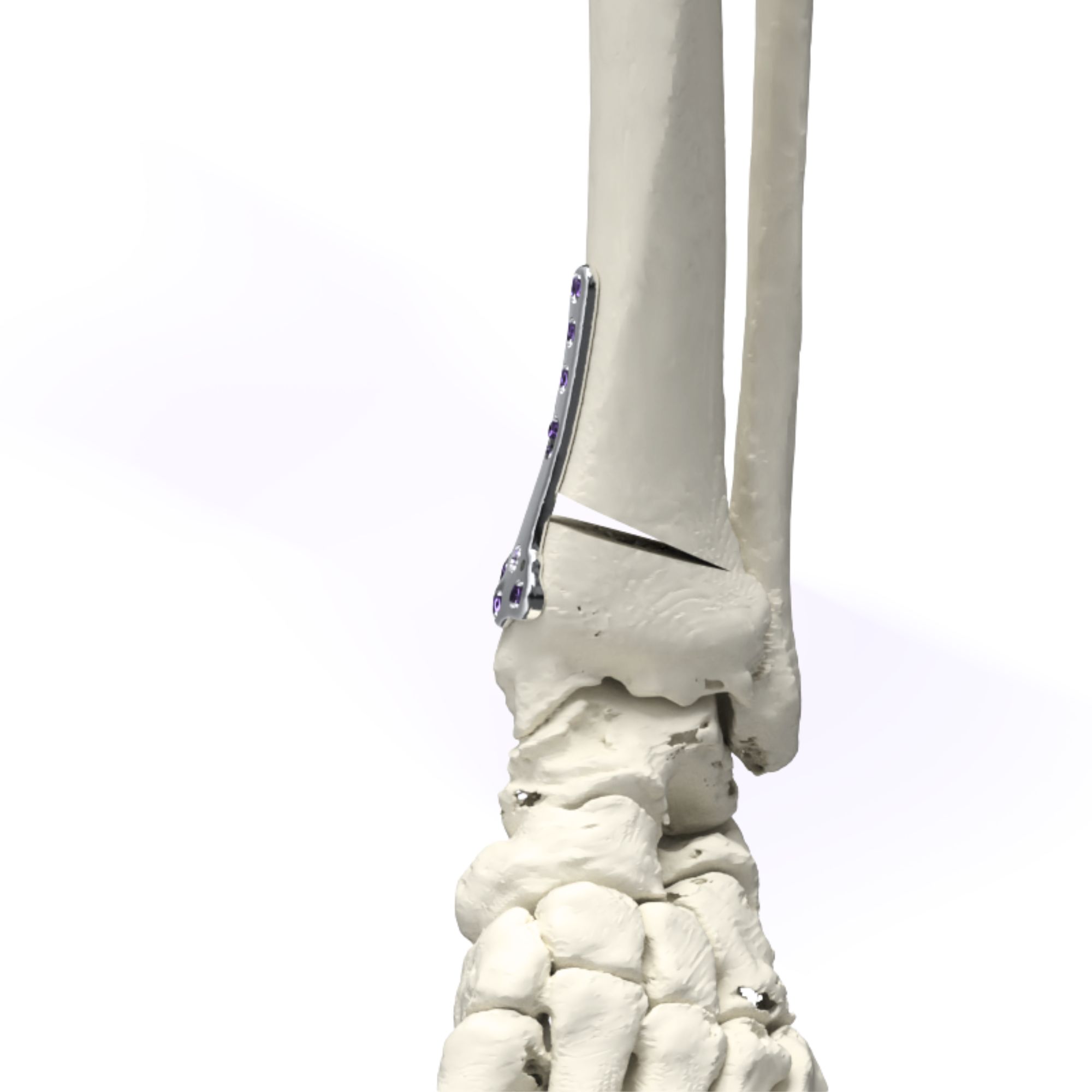
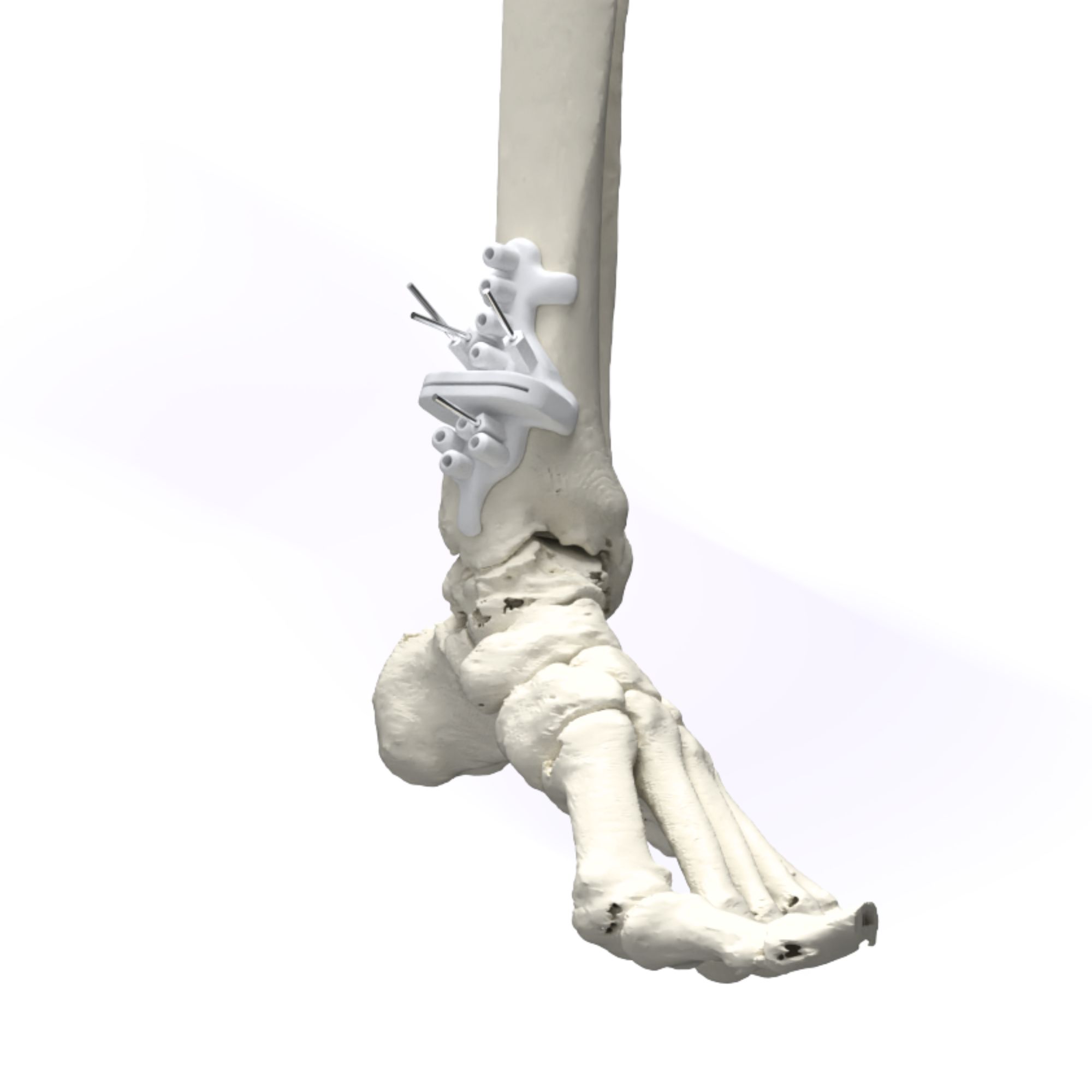
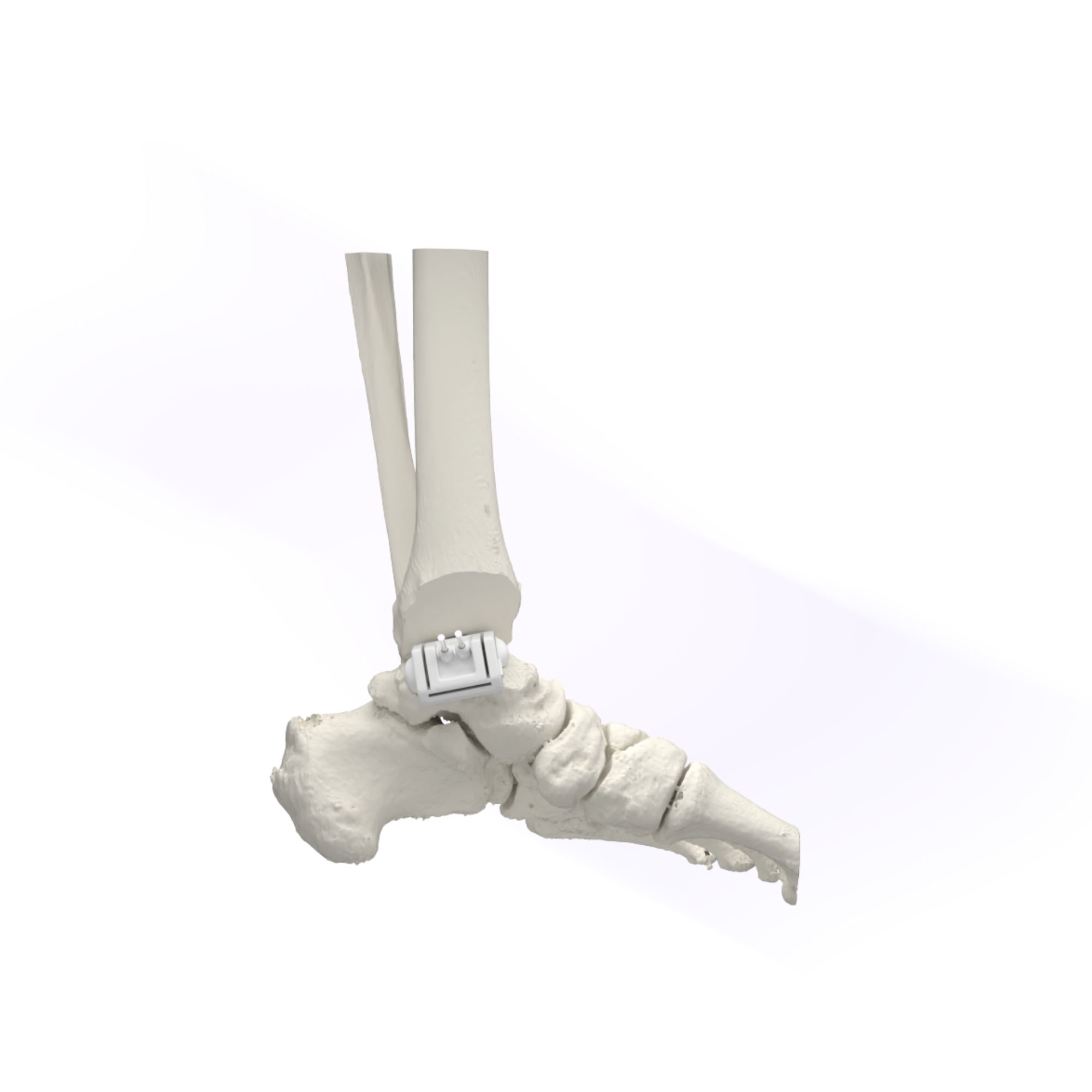
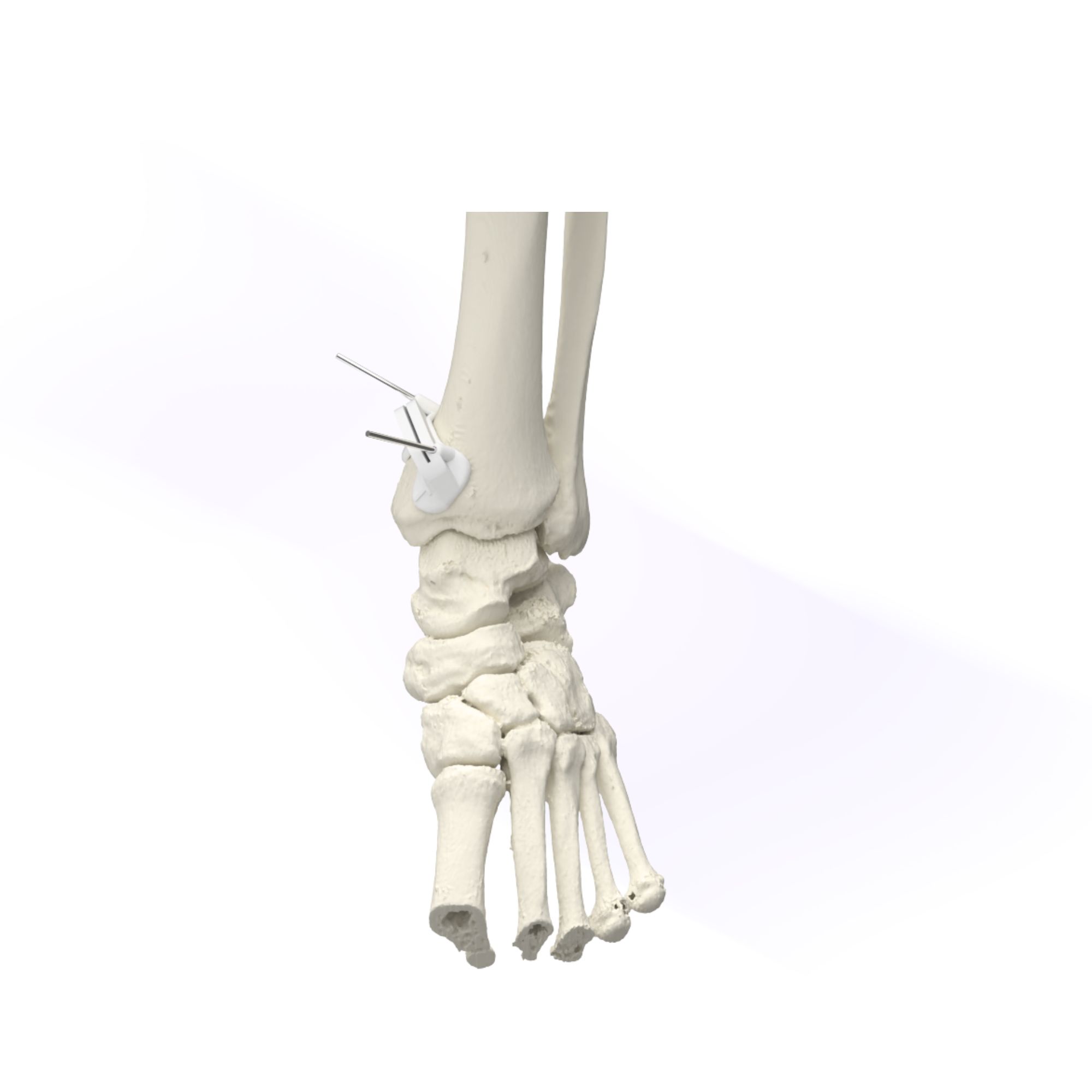
Distal Tibial Osteotomy Kit

Indications
- Mechanical axis abnormalities (varus/valgus, rotation, recurvatum/antecurvatum).
- Joint step-off or incongruity.
- Post-traumatic deformities of the distal tibia.
- Congenital or developmental deformities.
- Loss of tibial length due to previous fractures, infections, or resections.
Benefits
- Mechanical assessment of the lower limb to determine the exact correction.
- Surgical simulation and analysis of the postoperative limb alignment.
- Quantification of the correction and planned shortening or lengthening.
- Precision drilling and osteotomy using patient-specific guides adapted to the patient’s anatomy.
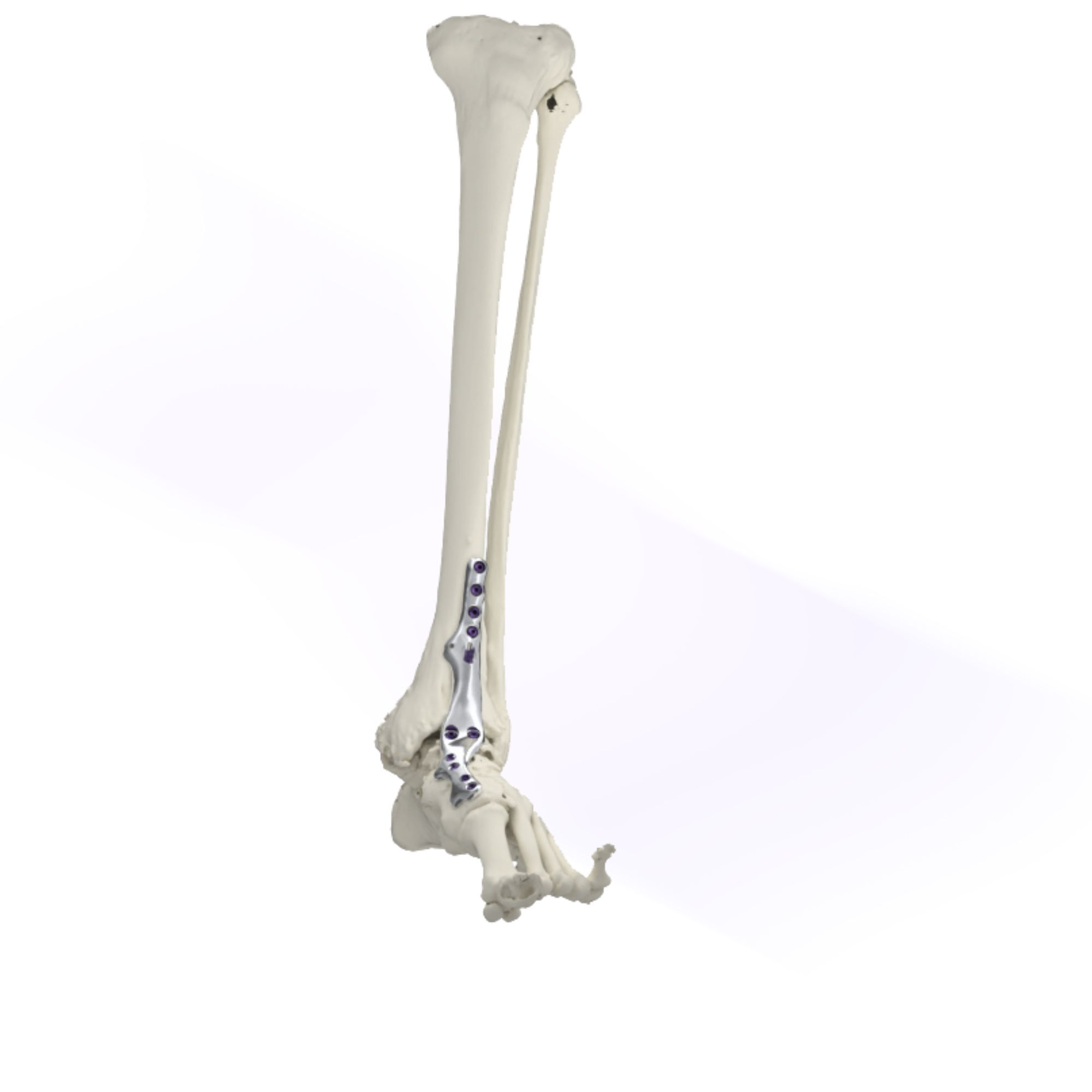
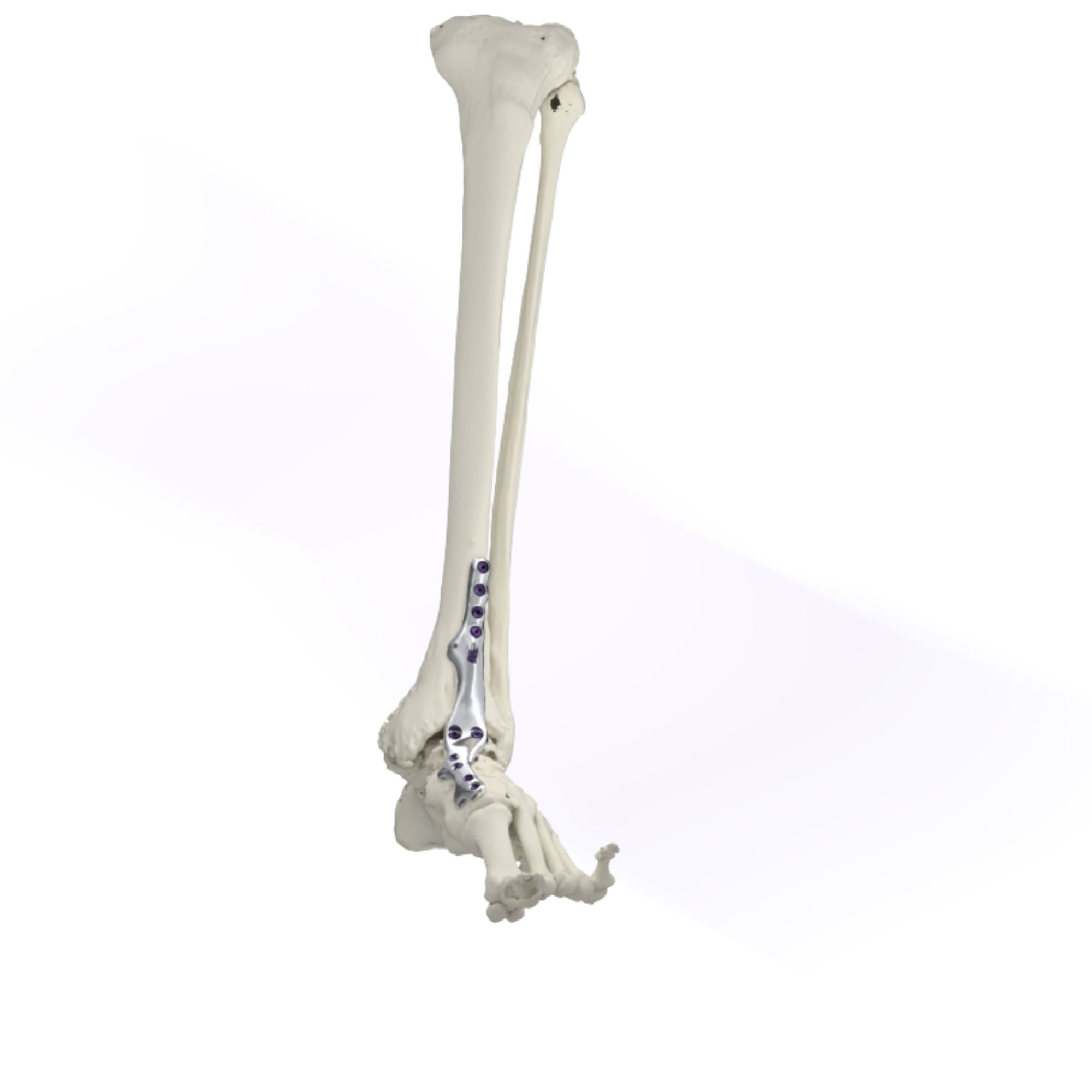
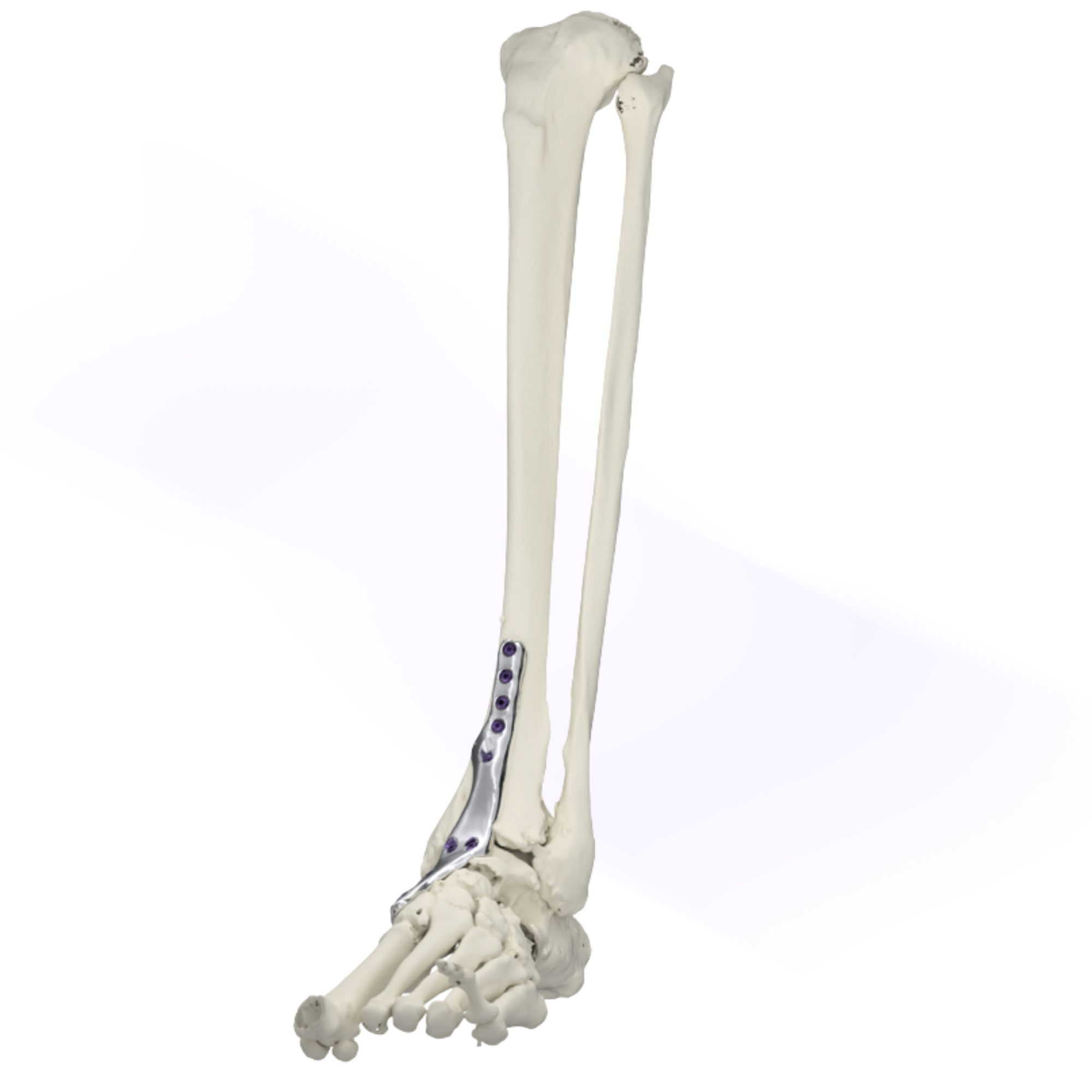
- Personalized implant tailored to the corrected anatomy.
- Planned screw trajectory, diameter, and length according to the patient’s anatomy.
- Planned reconstruction with vascularized fibular allograft or iliac crest bone graft.

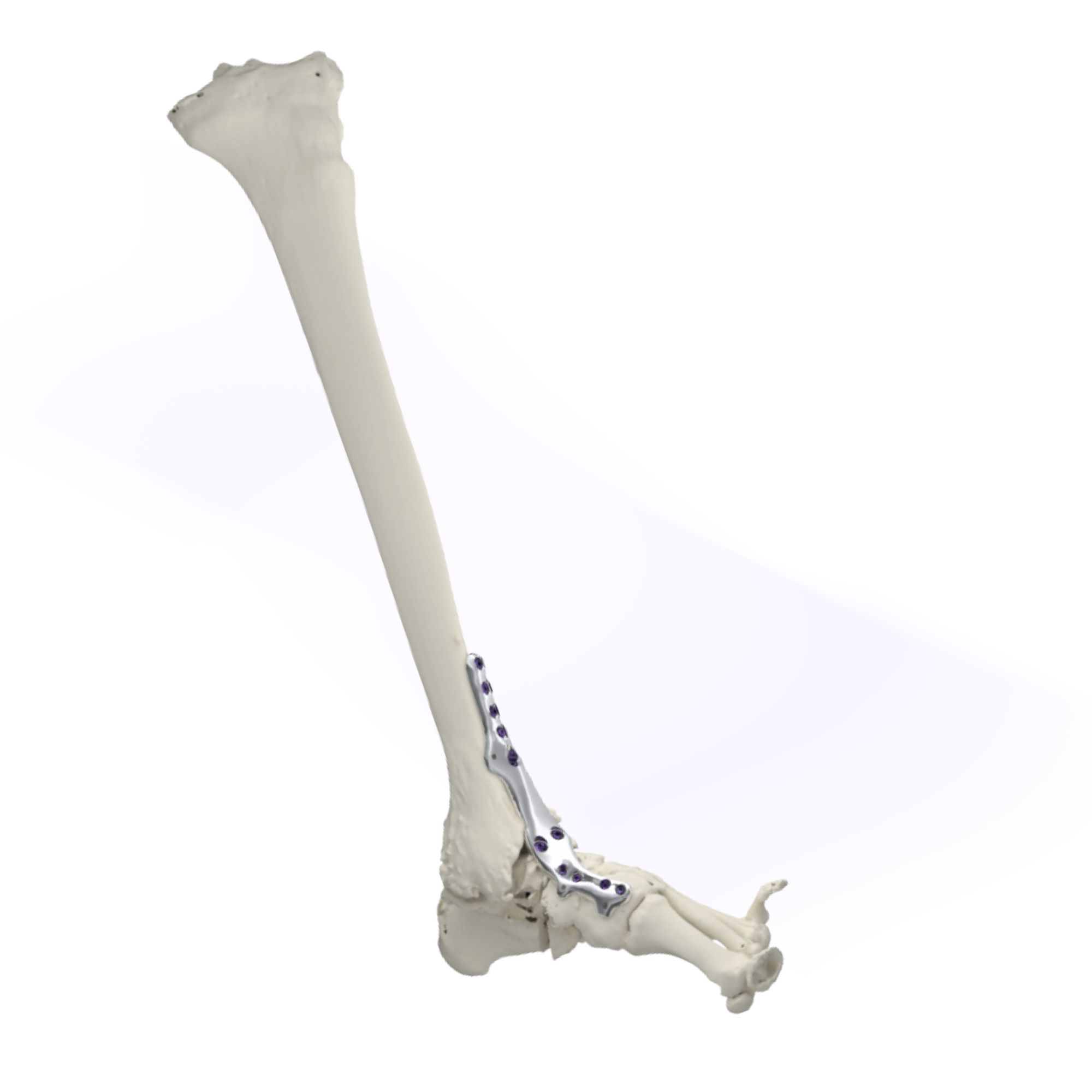
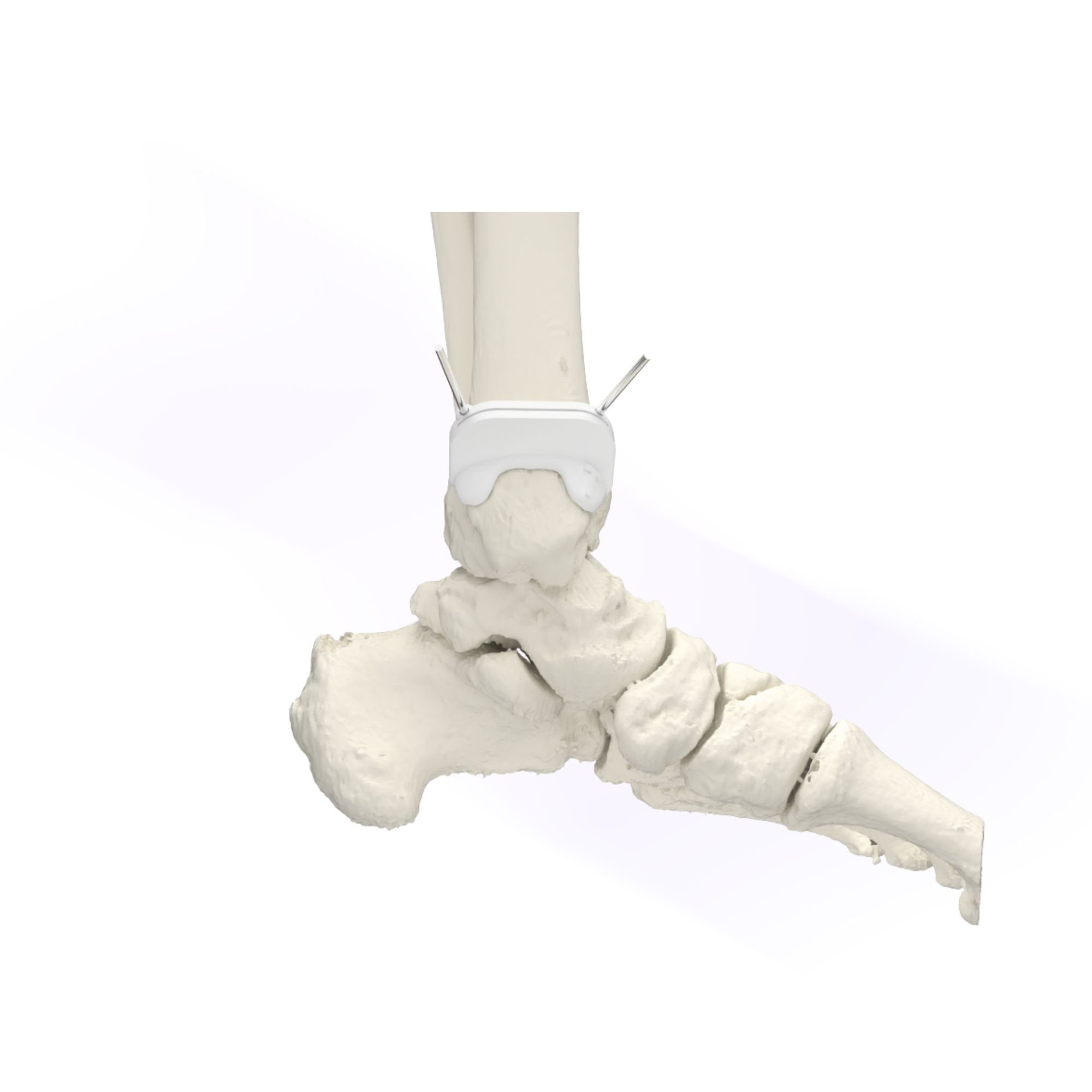
Artrodesis de tobillo

Indications
- Severe post-traumatic or degenerative arthritis with persistent pain and functional impairment.
- Nonunion, pseudarthrosis, or malalignment following previous tibiotalar or tibiotalocalcaneal arthrodesis.
- Sequelae of ankle, tibial pilon, or talar fractures.
- Residual rotational or angular deformities.
Benefits
- Personalized fusion angle tailored to the patient’s needs.
- Bone preparation of the contact surfaces using patient-specific guides adapted to the patient’s anatomy.
- Personalized implant designed to fit the corrected anatomy.
- Controlled and homogeneous compression.
- Planned screw trajectory, diameter, and length according to the patient’s anatomy.
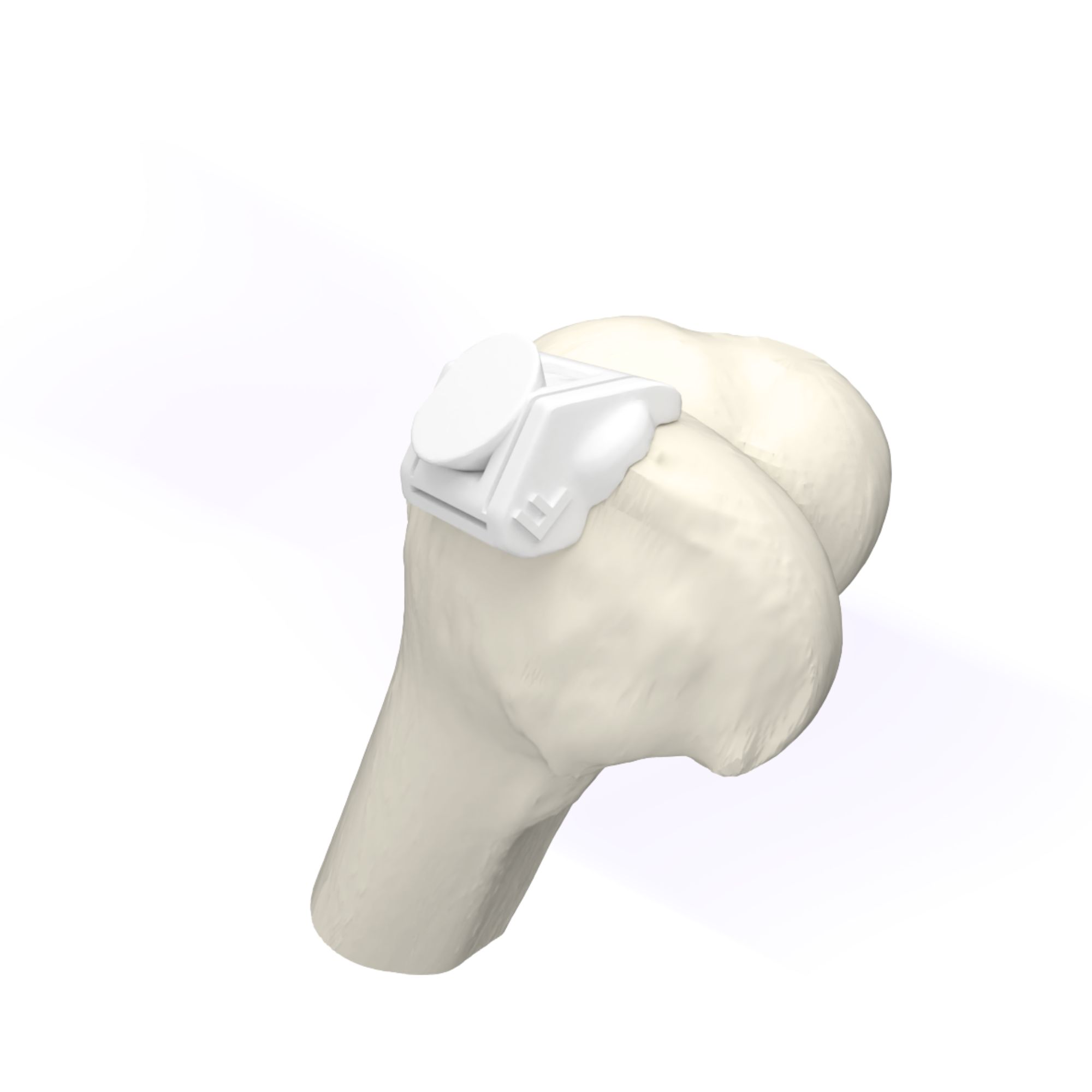
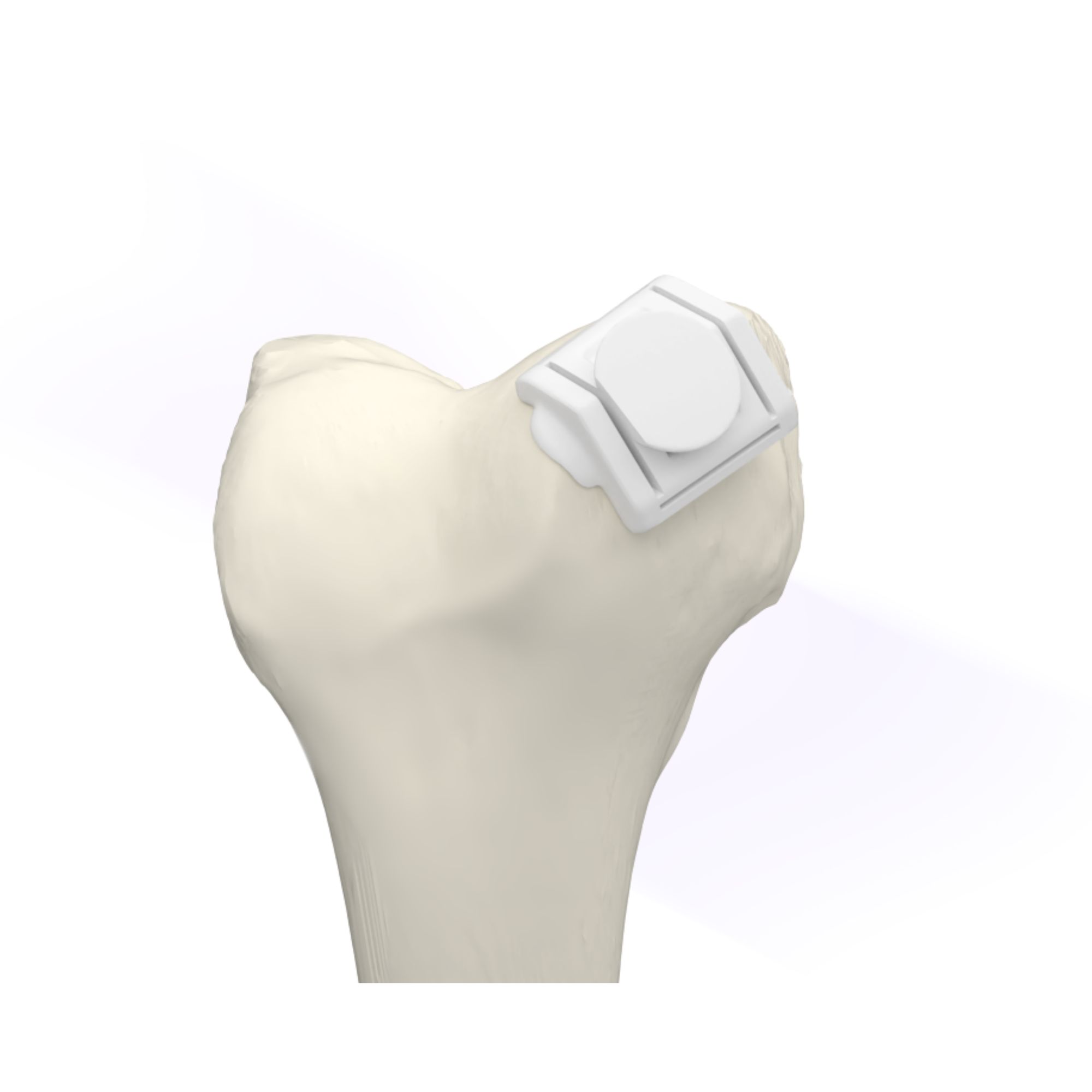
Talar Osteochondral Allograft Guide Kit
Indications
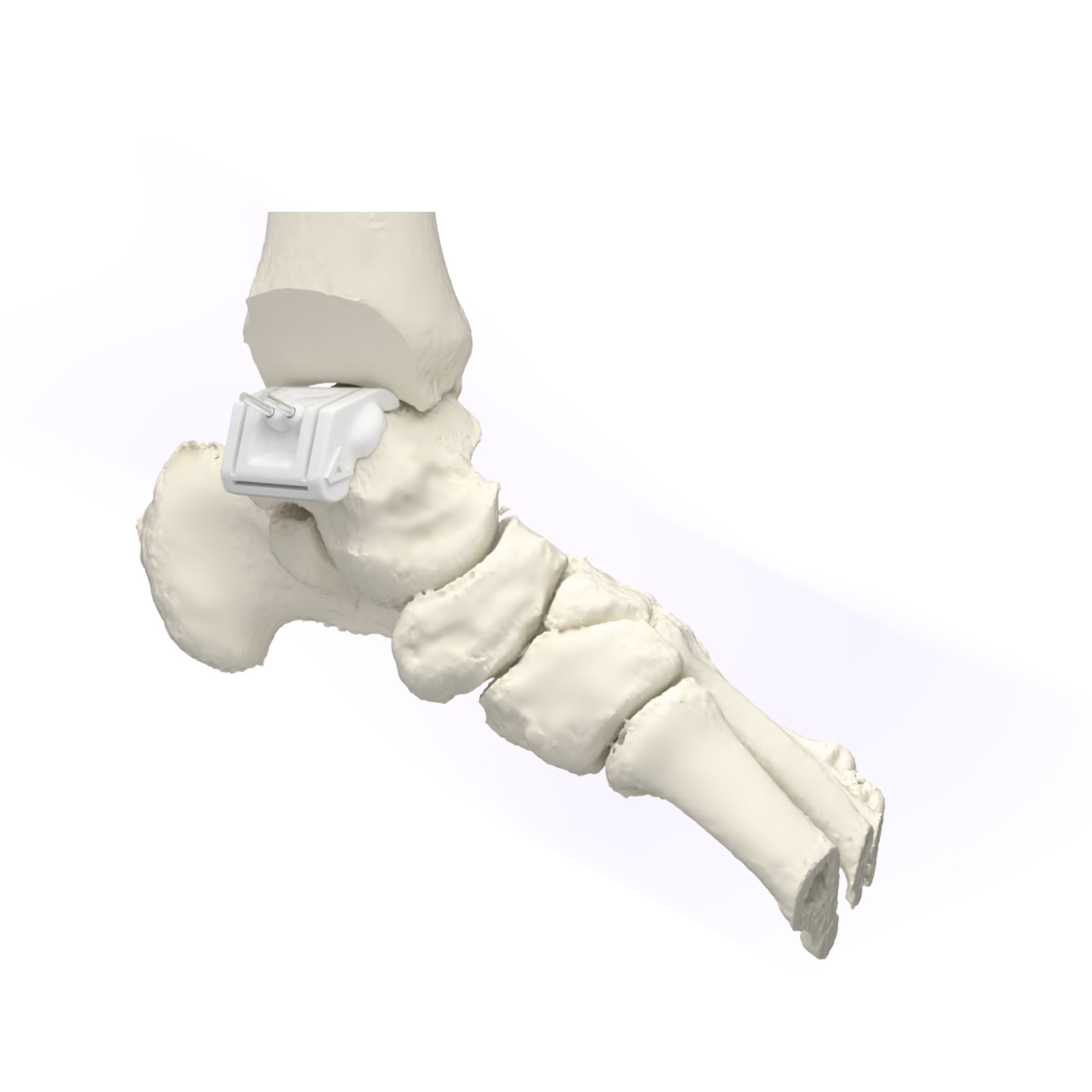
- Osteochondral lesions of the talus.
Benefits
- Accurate identification of the osteochondral lesion.
- Patient-specific guides for precise resection and drilling, adapted to the patient’s anatomy.
- Preservation of healthy bone with complete removal of pathological tissue.
- Harvesting of the allograft with preplanned diameter, depth, and orientation to optimize joint congruence.
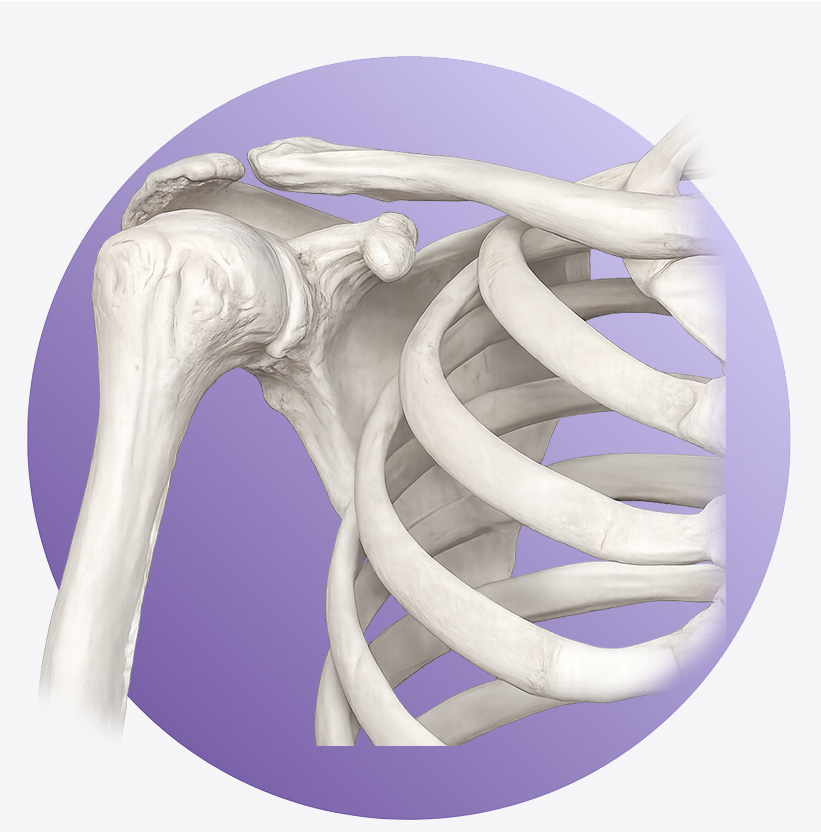
Shoulder
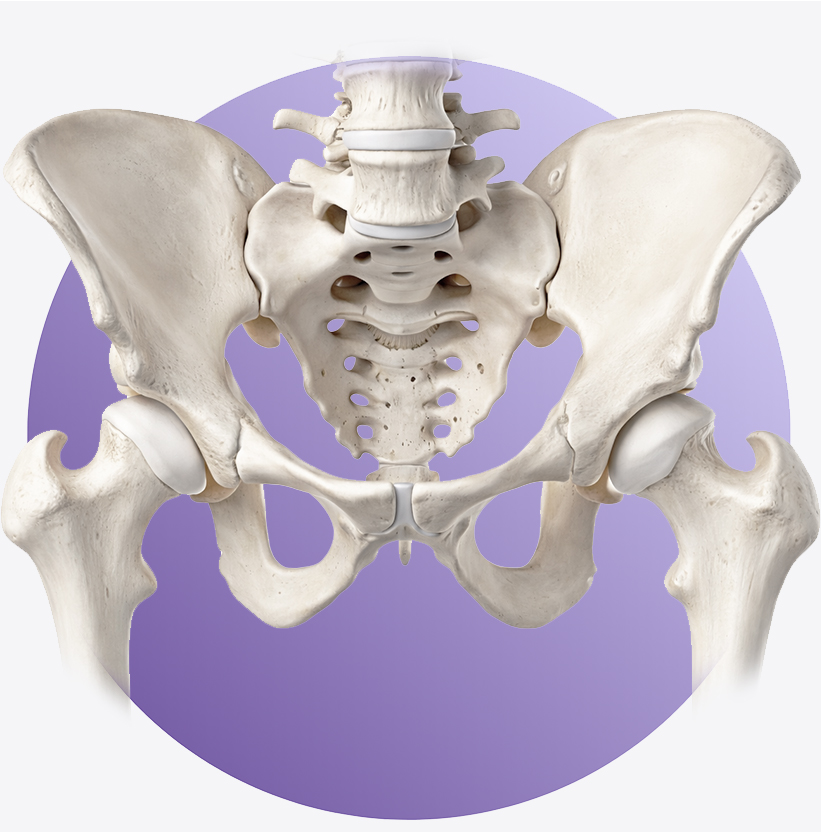
Hip
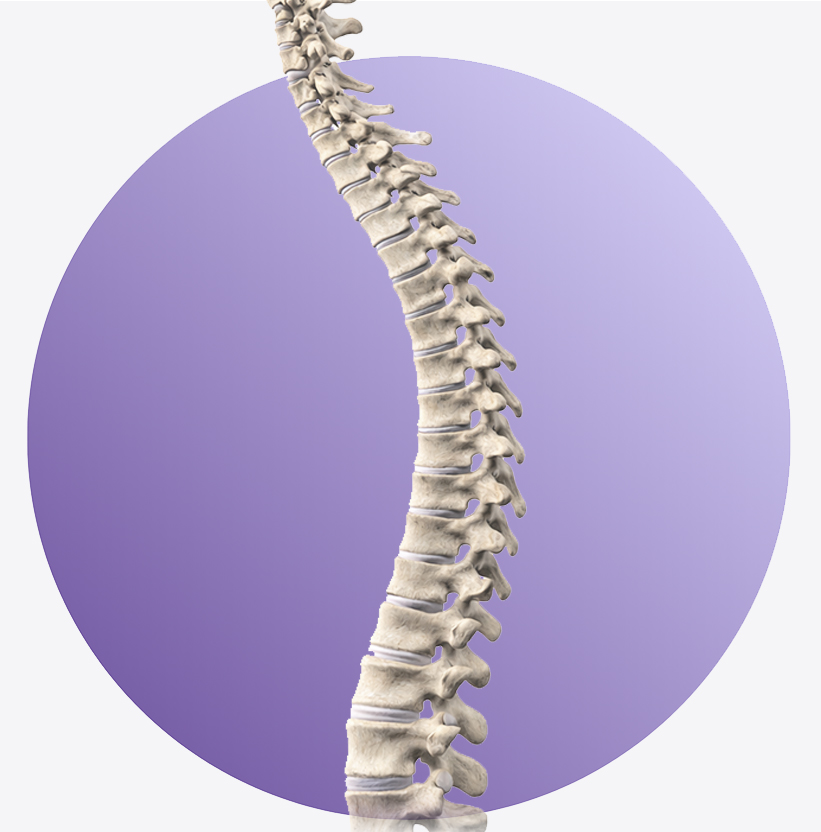
Spine
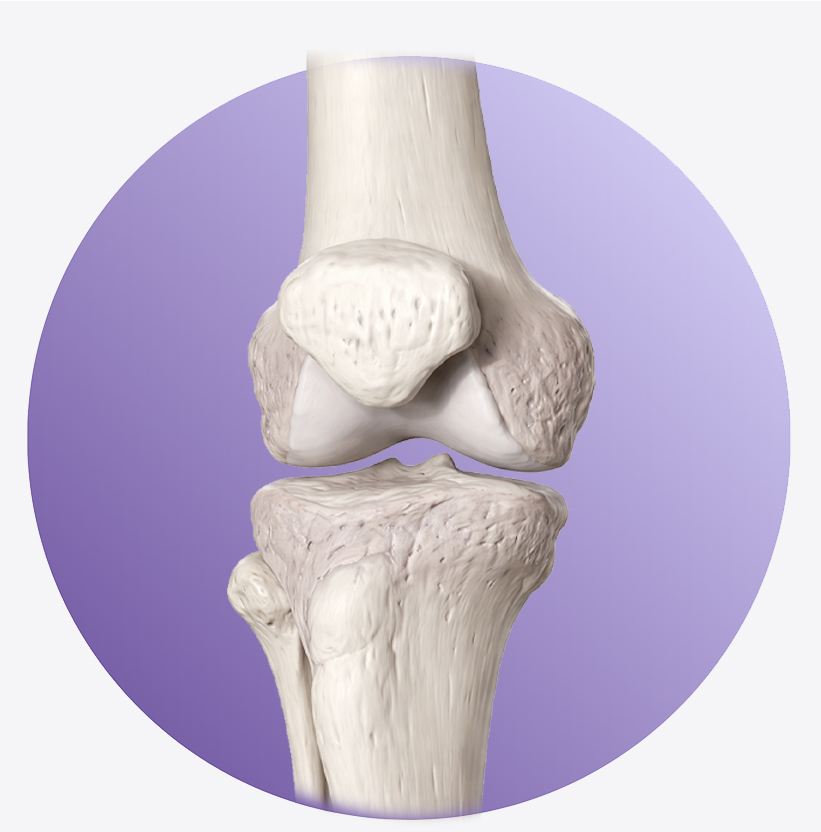
Knee

Foot
Can’t find the product you’re looking for?
Contact us to explore a personalised solution.